There are more AI businesses you can start than ever. That sounds like good news until you actually have to pick one.
Should you build an app? Sell automations? Start an AI creative studio? Become the person businesses call when they have no idea what to do with AI?
I’ve run several of these businesses, have friends running others, and have seen a lot of people in my community get started across this list. My biggest takeaway is simple: the easiest thing to build is not necessarily the best business to own.
Every model here can work. This ranking is about the problems you want to take on, how you get paid, and whether your value survives as the tools get better.
Key Takeaways
- AI websites offer beginners a practical entry point, even though basic builds have limited durability.
- Clear business outcomes make services easier to sell and give clients stronger reasons to stay.
- Consulting and AI leadership rank highest because they depend on judgment, adoption, and organizational change.
- Focus and sustained execution matter more than repeatedly switching to the newest AI business model.
Table of Contents
- How I’m Ranking These AI Businesses
- 13. AI SaaS: Huge Ceiling, Difficult Starting Point
- 12. Faceless AI Channels: Pick the Audience Before the Content
- 11. AI Websites: A Great First Move for Beginners
- 10. AI Operating Systems: Useful, but Often Hard to Measure
- 9. Generative Engine Optimization: SEO for AI Answers
- 8. AI Receptionists and Support Agents: Clear ROI, Growing Competition
- 7. AI Automation and Integration: Don’t Just Sell Workflows
- 6. AI Workshops: Get Paid to Teach and Discover Better Projects
- 5. AI Lead Generation: One of the Stickiest Offers
- 4. AI Creative Studio: Taste and Performance Beat the Generate Button
- 3. AI Education and Personal Brand: Durable, but Slow to Build
- 2. AI Consulting and Audits: Sell the Diagnosis
- 1. Chief AI Officer: Own the Strategy and the Outcome
- The Pattern: Move From Selling Builds to Selling Judgment
How I’m Ranking These AI Businesses
I’m comparing each model on three dimensions, each scored out of five:
- Technical complexity: The expertise required to deliver something people will pay for. In the individual ratings below, higher numbers generally reflect more demanding work.
- Market opportunity: How attractive the balance between buyer demand and available providers looks.
- Durability: Whether the offer can become a lasting business rather than disappear with the next platform update.
This is a subjective ranking, not a formula where you add the scores and automatically get a winner. A technically demanding business can still be a much better opportunity than an easy, crowded one.
Also, the prices below are examples of what providers charge or published compensation ranges. They are not promises of what you will earn.
13. AI SaaS: Huge Ceiling, Difficult Starting Point
AI SaaS means building software, potentially with a tool like Claude Code, and charging a recurring subscription to use it.
This is probably the most hyped business on the list. To be fair, it also has one of the highest ceilings. A small team can serve a large customer base.
But building the app is not the hard part anymore.
You might get an initial version working in an afternoon or a few days. Getting people to discover it, pay for it, keep using it, and not cancel is the actual business. That is much harder.
A lot of successful SaaS founders start with an advantage: an existing audience, a service business that reveals customer needs, or capital to fund distribution and development. Starting without any of those makes the climb steeper.
And once hundreds or thousands of people use your product, security and infrastructure stop being optional details.
The market is also crowded. One App Store report I referenced put new releases at roughly 560,000 in the first half of 2026, nearly matching the previous full year, while downloads barely increased. More software does not automatically create more demand.
Scores: Technical complexity 4/5, market opportunity 1/5, durability 3/5.
A product with a real competitive advantage can last. A thin wrapper around someone else’s model can lose its reason to exist after one platform update. I like SaaS as something you build from a position of strength, not necessarily as your first AI business.
12. Faceless AI Channels: Pick the Audience Before the Content
Faceless AI channels use AI to produce content for YouTube, TikTok, or Instagram without making the creator’s face the centerpiece.
They can work, and they’re relatively inexpensive to experiment with. I’ve been building a few for AI Automation Society myself, partly for fun.
But views alone are not a business model.
You need to know who the audience is and why somebody would pay to reach them. A news or entertainment page such as Pubity illustrates the sponsorship model: build reach that advertisers value, then sell access to that audience. A sports picks account might instead direct people toward a paid community.
Random AI content can go viral without creating an audience that sponsors care about. That distinction matters much more than how efficiently you generate posts.
There is also platform risk. YouTube’s channel monetization policies address repetitive and mass-produced content. Using AI does not remove the need for original value.
Scores: Technical complexity 2/5, market opportunity 2/5, durability 1/5.
The upside is a valuable distribution channel. The downside is that the platform can change the rules overnight. Start with an audience worth serving, not a machine for producing the most content possible.
11. AI Websites: A Great First Move for Beginners
AI website services are straightforward: use tools such as Claude Code, Codex, or Lovable to build sites for businesses much faster than a traditional development process.
Despite its low overall ranking, this is one of the first models I’d recommend to a total beginner.
It’s visual. The deliverable is easy to understand. You can create a demo in around 20 minutes before pitching a business, which makes it much easier to show that you can deliver.
Some development agencies still charge $5,000 to $10,000 for work that AI can now help you produce in an afternoon. That creates room to compete on speed and price.
But that same advantage is available to everybody else. AI site builders already offer subscriptions around $9 a month, so a basic website is becoming harder to defend as a premium standalone service.
My view is that a simple AI website business can become difficult to grow beyond roughly $10,000 to $20,000 a month without evolving the offer. That is an opinion about this model, not a hard revenue limit.
Scores: Technical complexity 1/5, market opportunity 2/5, durability 1/5.
Use websites to build momentum, delivery experience, and client relationships. Then use those relationships to move toward more valuable problems.
10. AI Operating Systems: Useful, but Often Hard to Measure
An AI operating system is a central setup where a company’s agents, automations, tools, and team knowledge live together.
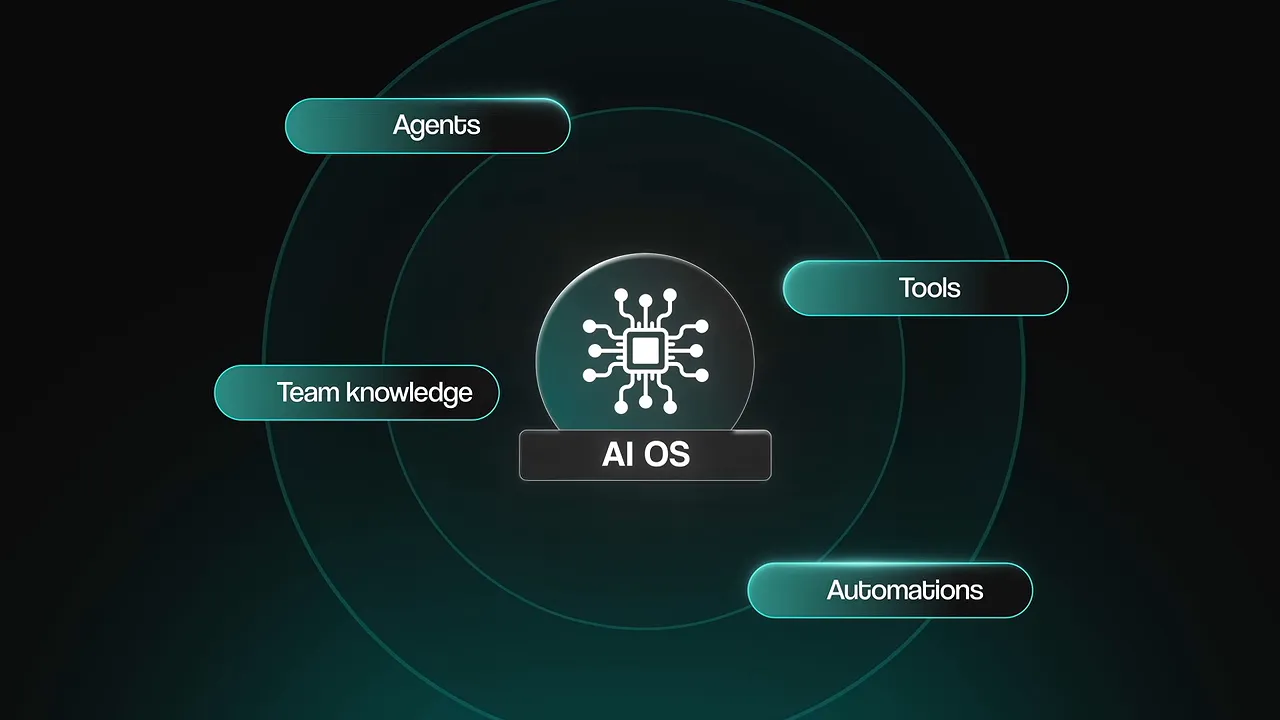
I like this as an entry offer. Once a business trusts you with its central AI setup, that can open the door to larger projects, such as a shared knowledge system or consulting engagement.
The problem is the KPI.
Every offer should move a clear business outcome that the client cares about. “All your AI tools in one place” describes a deliverable. It does not necessarily explain the result.
This also works best when the owner already believes in AI. Otherwise, you have two jobs: explain why the setup matters and persuade the team to change its habits.
If nobody adopts it, you may end up with a technically functioning system but no meaningful outcome, strong case study, or referrals.
Scores: Technical complexity 3/5, market opportunity 4/5, durability 2/5.
The opportunity is real. Just don’t confuse a central hub with a measurable improvement.
9. Generative Engine Optimization: SEO for AI Answers
Generative engine optimization, or GEO, helps brands become visible in answers from tools such as ChatGPT, Perplexity, and Claude.
The basic idea is familiar: people ask a question, and a business wants to be among the recommendations they receive. What changes is the discovery interface.
There are meaningful signs of demand. Profound, a tool in this category, announced a $180 million funding round at a $1.8 billion valuation. Vercel’s CEO also reported that ChatGPT was referring around 10% of new sign-ups.
Those examples do not prove that a new GEO agency will succeed, but they help explain why businesses are paying attention.
If you already do SEO, this is a natural extension. You understand visibility, measurement, and proving results. Without that background, getting reliable outcomes can be much harder than the “SEO for AI” label makes it sound.
There is platform risk here, too. As advertising enters AI search experiences, providers may gain more influence over commercial visibility. That makes it risky to assume the current discovery environment will stay the same.
Scores: Technical complexity 2/5, market opportunity 3/5, durability 2/5.
I like this most for someone who already knows search and can bring that experience into a new channel.
8. AI Receptionists and Support Agents: Clear ROI, Growing Competition
AI receptionists and support agents handle business communications across phone calls, website chat, direct messages, and email. They can answer questions, book appointments, and hand off to a person when needed.
The value is easy to explain.
An Invoca analysis of 70 million business calls found that only 56% were answered by a person. For a dentist or HVAC company, a missed call can mean a missed appointment or a lost job.
That gives you a much clearer business conversation than selling “an AI agent.” You are helping the company capture demand it already has.
Setup fees can run roughly $1,500 to $5,000, plus a monthly retainer.
The catch is durability. Platforms such as Podium, ServiceTitan, and Weave are building AI receptionist capabilities into software these businesses may already pay for.
Scores: Technical complexity 3/5, market opportunity 4/5, durability 2/5.
The immediate problem is valuable. The question is whether your service remains worth paying for when the client’s existing platform offers similar functionality.
7. AI Automation and Integration: Don’t Just Sell Workflows
AI automation and integration connects AI to the systems a business already uses: its CRM, email inbox, invoicing tools, and other operational software.
You might build with n8n, Make, Claude Code, or another tool. The platform is secondary to what the integration accomplishes.
This is where I started, and it is still a real opportunity. Upwork reported 187% growth in AI integration work in its cited annual comparison.
But building automations is getting easier, which means the build itself is becoming commoditized. Businesses are also bringing these skills in-house.
A single workflow may sell for around $500 to $2,000. That can be useful work, especially early on, but the more valuable skill is identifying the right workflow to improve.
- Find the business bottleneck.
- Connect the proposed fix to a result the business values.
- Charge for solving that problem, not just assembling the workflow.
Scores: Technical complexity 2/5, market opportunity 3/5, durability 2/5.
That shift from implementation to diagnosis is important enough that it becomes a separate business model near the top of this list.
If getting your first client is the obstacle, I put together a free First Client SOP covering a one-sentence service pitch, demonstrating your ability before payment, and getting started without case studies.
|
6. AI Workshops: Get Paid to Teach and Discover Better Projects
AI workshops help a company’s team use AI in their actual jobs. Not generic tool demonstrations, but practical education connected to their work.
Published rates I found ranged from roughly $1,000 for a half-day session to $5,000 for a full-day workshop with a larger team.
The training gap is significant. One employee survey found that only 36% felt adequately trained in AI. I suspect the gap is even larger outside the population captured by that survey.
I’ve delivered a lot of these workshops, and they are a great way to establish a client relationship.
You build trust because you are in the room helping people. You also hear about their actual problems, which often leads naturally to a larger project afterward.
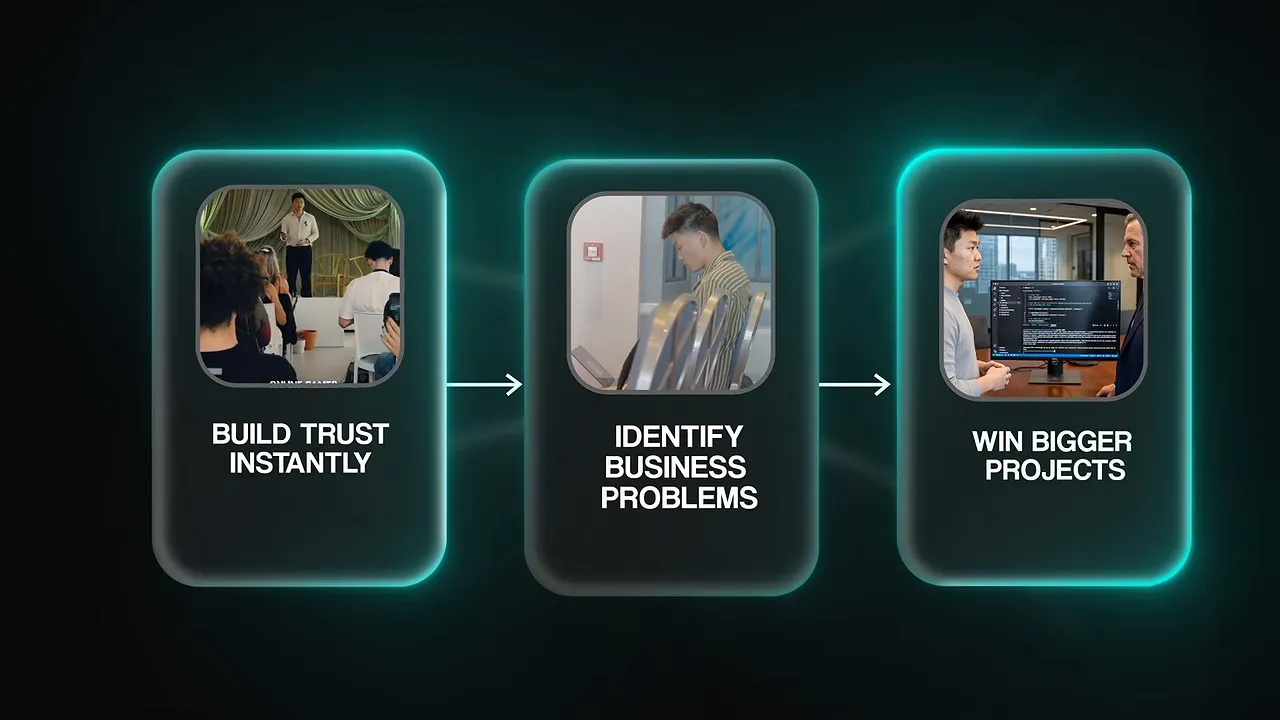
Of course, teaching is a skill. Knowing how to use a tool is not the same as helping a team understand when and how to apply it.
Scores: Technical complexity 3/5, market opportunity 3/5, durability 3/5.
I like workshops because they generate revenue while helping you understand where the business needs more support.
5. AI Lead Generation: One of the Stickiest Offers
AI lead generation uses AI to research prospects, enrich information, personalize messaging, and test outreach at a scale that would be difficult for a human team alone.
I like this model because the KPI is clear. More useful leads can mean more customers and more revenue.
And if your client is making money from the leads you provide, they have a strong reason to keep paying your retainer.
Clay’s announcement that it had crossed $100 million in annual recurring revenue is one indicator of the commercial interest in this category. But access to powerful tools does not make lead generation easy.
You need to solve it for your own business first.
If you cannot generate your own leads, it is difficult to persuade someone that you can generate theirs. That makes an existing lead generation agency an especially strong starting point: it already understands the service and can add AI to improve delivery.
Scores: Technical complexity 4/5, market opportunity 3/5, durability 5/5.
Businesses will keep needing customers. If you can reliably help them acquire those customers, the service can be very durable.
4. AI Creative Studio: Taste and Performance Beat the Generate Button
An AI creative studio produces ads, commercials, carousels, and edited videos for brands.
AI has dramatically changed the production side. One person can now do work that previously required a team and expensive equipment. Upwork’s cited report showed 329% growth in AI video generation and editing.
That is exciting, but there is a catch: everyone else has access to the generate button, too. Even advertising platforms are putting creative generation directly into their own tools.
The pricing pressure is real. One market comparison I referenced showed average UGC video prices dropping around 44% over a year.
So what do brands still pay for?
- Taste: Knowing what makes a creative good rather than merely generated.
- Audience fit: Choosing the right models and creative approach for the people the brand wants to reach.
- Performance feedback: Running ads, learning from the data, and using those lessons to improve the next batch.
Scores: Technical complexity 3/5, market opportunity 4/5, durability 3/5.
This can become a strong recurring service when your creative actually works. The defensible value is not how many assets you can produce. It is whether those assets perform.
3. AI Education and Personal Brand: Durable, but Slow to Build
AI education includes courses, communities, newsletters, and educational content. A personal brand makes that business about more than any single tool.
Full disclosure: this is my main business, so take my ranking with that in mind.
The space is getting more competitive as new creators enter. At the same time, more people are looking for help learning AI. Both supply and demand are growing.
The biggest advantage is durability. If people trust your judgment, you can change what you teach as the tools change. Their relationship is with you, not just one piece of software.
You still need real involvement in the work and the ability to communicate it effectively. Putting your face and identity behind the material can strengthen that connection.
The catch is speed. Building an audience can take years.
I did agency work, consulting, and workshops long before I had a personal brand. The proof came first. Trust followed.
That is why I would not let audience building distract you from getting real experience early. Once you have found your specialty, the brand can support other businesses, including a SaaS product later. That is a very different position from launching software with no distribution.
Scores: Technical complexity 3/5, market opportunity 3/5, durability 5/5.
2. AI Consulting and Audits: Sell the Diagnosis
AI consulting starts with understanding how a business actually works. You identify its bottlenecks, then recommend where AI can save the most time or money.
This is the higher-value version of the automation work discussed earlier.
Think of it like being a doctor. The tools for building the fix keep getting cheaper. Knowing what needs fixing is still valuable.
And the job does not end with a recommendation. Businesses need help with:
- Change management and adoption.
- Governance.
- Getting stakeholders on board.
- Working within the company’s culture.
Those human and organizational challenges are a big part of what the client pays for.
There are strong demand signals. LinkedIn ranked AI consultants and strategists as the second-fastest-growing role in the cited US ranking. Anthropic and OpenAI also announced enterprise AI services ventures, while investors have been buying service businesses such as accounting and IT firms with plans to apply AI.
AI audits can sell for roughly $1,000 to $15,000, depending on the engagement.
Scores: Technical complexity 3/5, market opportunity 4/5, durability 4/5.
AI can help write an audit document. That is not the same as guiding change inside a company and getting people to adopt it.
I rank consulting above education because it can pay faster. You do not need a large audience before you can solve a valuable business problem.
1. Chief AI Officer: Own the Strategy and the Outcome
The top opportunity is becoming a chief AI officer. There are two ways to approach it, and I like both.
Become the AI Leader Inside One Company
You can become the AI person at a company where you already work, then grow into responsibility for AI strategy and its effect on profit and loss across the organization.
That is not technically a standalone business. But it can be a better financial opportunity than many businesses on this list.
Become a Fractional Chief AI Officer
Alternatively, you can serve as the AI lead for several companies at once.
This can grow naturally from consulting. You start by diagnosing an important problem, help the company make progress, and eventually take on ongoing leadership responsibility.
The role requires enough technical understanding to make sound decisions, but it is broader than implementation. You are responsible for strategy and business impact, not just shipping individual automations.
IBM’s cited survey of 2,000 CEOs reported that 76% of surveyed organizations had a chief AI officer, up from 26% a year earlier. That sample concerns large organizations, so it should not be read as a claim about all businesses.
PwC also reported a 62% wage premium for AI skills in its cited analysis. That is a workforce-level finding, not a guaranteed personal salary increase.
For the executive role specifically, one recruiting firm published a US chief AI officer base salary range of roughly $280,000 to $650,000 a year.
Scores: Technical complexity 4/5, market opportunity 5/5, durability 5/5.
My view is that this role becomes more valuable as AI advances. More capability creates more decisions about what to adopt, where to invest, and how to make it work across an organization.
The Pattern: Move From Selling Builds to Selling Judgment
Look across the ranking and a pattern appears.
Near the bottom, you are mostly selling the thing you build: a website, an app, a channel, or a standalone automation.
Near the top, you are selling judgment: which problem matters, what to do about it, and how to help a business get the result.
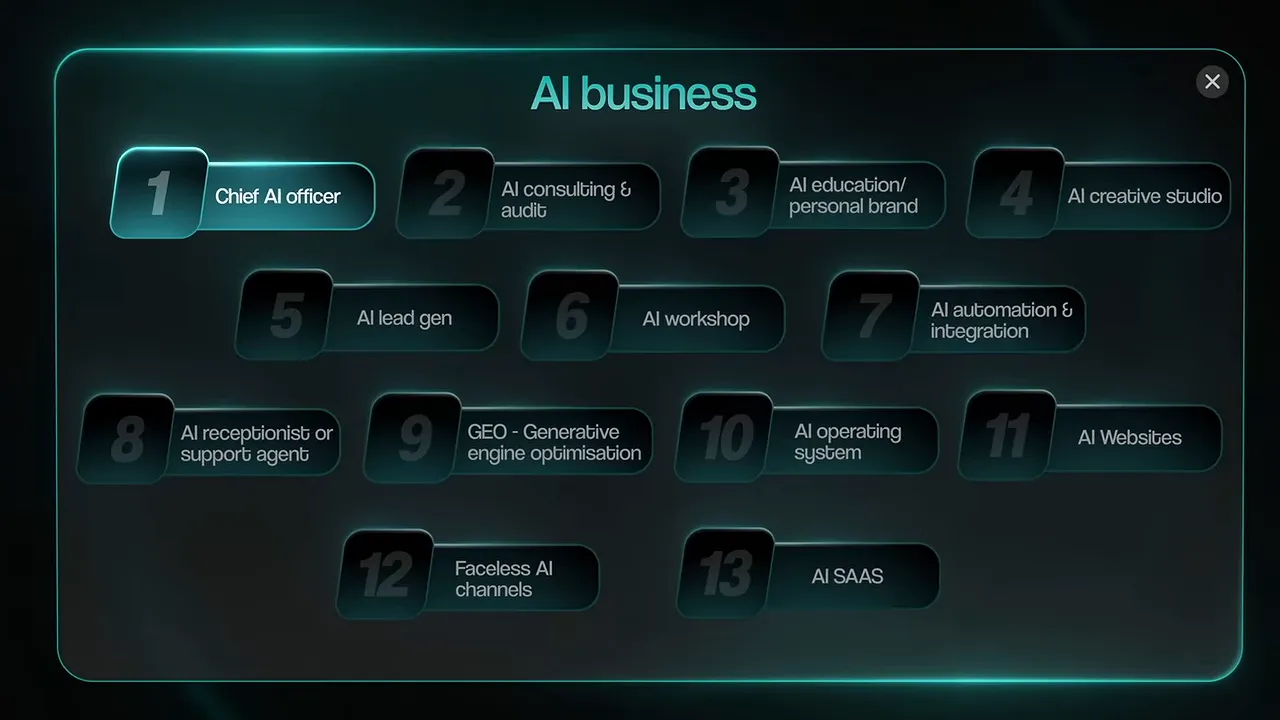
That does not mean beginners should immediately pitch themselves as chief AI officers. The entry point and the destination do not have to be the same.
A sensible progression is:
- Start with a concrete service. Websites can help you build confidence and prove you can deliver.
- Learn from real clients. Understand their operations and the problems they care about.
- Expand into workshops and consulting. Help teams use AI and identify better opportunities.
- Grow into ongoing leadership. With enough experience and trust, a fractional or in-house AI leadership role can become a logical next step.
You can also build a successful business by staying focused on one of the other models. Every option here can work.
The entrepreneurs I know who have succeeded did not necessarily pick the perfect business at the perfect moment. They stayed focused longer than the people constantly changing niches, tools, and offers.
Pick one model, get good at solving its problems, and stay with it long enough to make it work.


