Fable 5.2 won seven of my twelve tests. Astra 6.2 won five. That sounds like a pretty straightforward result until you get to the cost: Fable cost 7.2 times more overall and ran for almost five times longer.
And no, that was not because Fable had a higher price per token. Both models had the same listed input and output token pricing in this comparison.
I put GPT-6.2 Astra in Codex head-to-head with Fable 5.2 in Claude Code on the kinds of tasks I actually use AI for: websites, slide decks, video editing, financial workbooks, trip planning, interactive experiences, and a very ridiculous browser game. The interesting question was not just which model could produce the best result. It was which result was worth the time and money.
Key Takeaways
- Fable won seven tasks, but cost 7.2 times more and ran almost five times longer.
- Astra often delivered cleaner visual designs, while Fable often built more complete functional experiences.
- Identical per-token pricing did not produce similar costs because Fable consumed substantially more tokens.
- Existing skills need model-specific testing because both models sometimes failed to use the intended workflow.
How I Set Up the Comparison
For each task, both models received the exact same /goal prompt. Both ran on high effort, and they worked in separate worktrees so they could not interfere with each other.
I tracked runtime, input tokens, output tokens, and the estimated cost under API billing. The dollar figures below are approximate API-equivalent costs, not a claim that every run was charged separately through an API.
A lot of my prompts were intentionally vague. I wanted to see what the models and their surrounding tools would do with the same broad goal, existing assets, and available context. Would they find the right brand guidelines? Would they use an existing skill? Would they build something that merely looked good, or something that actually worked well?
That also means this is a comparison of the model working inside its agent environment, not a perfectly isolated test of model intelligence. Skill selection, browser use, and the way the agent spends tokens all affect the result.
1. Web Design: Astra’s Cleaner Site Wins on Value
The first task was a website for Perkform, a fictional coffee and protein brand I use for testing because it already has brand guidelines and assets.
Astra built a clean, restrained site with a real product photo, strong typography, and a navigation bar that responded as I scrolled. It did not feel obviously AI-generated, which is a big compliment.
There were a couple of problems. One scroll-driven sequence moved past its third image too quickly, and the flavor selector cropped the product imagery. Those are the kinds of things I would expect a visual check to catch.
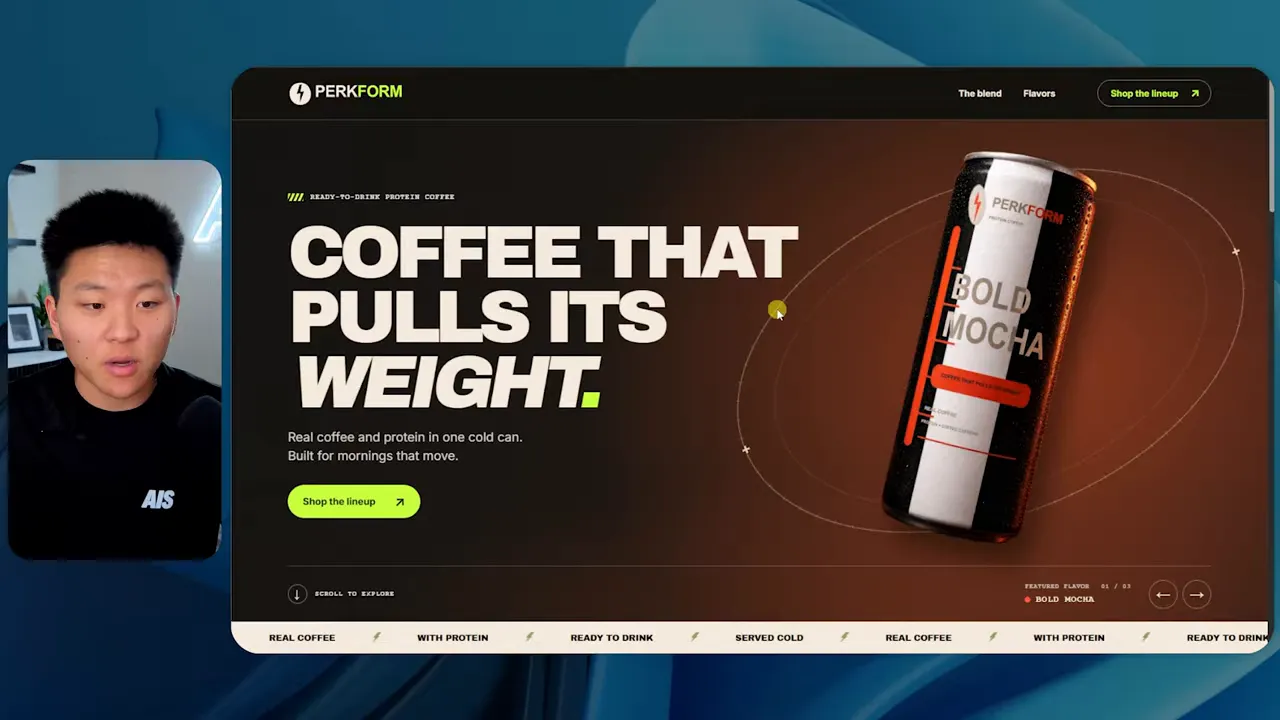
Fable’s version had more movement. Text animated into the hero, a ring orbited the can, and the product layered nicely with the typography. Flavor switching worked in both the hero and another section. It also created an animation where coffee and protein swirled together, which communicated the product’s value proposition really well.
Fable handled the image crops better, too. It was a very good site. But it also asked me to scroll through quite a lot, while Astra’s version felt simpler and more direct.
- Astra: About 12 minutes and $2.50.
- Fable: About 56 minutes and $17.50.
- My pick: Astra 6.2.
Both outputs were good. I slightly preferred Astra’s cleaner direction, and the cost difference made that decision much easier.
For website work, I also use my free ScrollCraft website design skill. It covers scroll-driven animation and layering, but also the less flashy things that make a site feel right: typography, spacing, depth, and taste.
2. Slide Decks: Both Were Good, So Cost Decided It
Next, I asked both models to turn a mock survey into a twelve-slide Hercules Advisor presentation, using another fictional brand with existing guidelines.
Astra’s deck was professional and completely on brand. The colors and logo were right, the charts were clear, and the slides did not contain too much text. My main criticism was repetition. A few consecutive slides used almost the same layout.
Fable produced more variety: different columns, boxes, chart arrangements, and larger text treatments. I liked the consistent branding in the top-right corner of each slide. I was less convinced by the chart on the title slide, and the deck generally had more words.
This is where the purpose of the presentation matters:
- For a live presentation: I would lean toward Astra’s simpler slides because they are less distracting.
- For a deck sent by email: Fable’s denser slides provide more material to read independently.
Neither output was bad, and this felt like a straightforward enough task that these models might be overkill anyway. So I gave the round to the cheaper option.
My pick: Astra 6.2. Astra cost about $2, compared with about $9 for Fable. The measured cost difference was roughly 4.8 times.
3. Painting in Canva: Astra Solved a Problem Fable Did Not
This is one of my favorite little benchmarks. I give the model a photo of me, leave Canva open, and ask it to paint the image.
Fable’s painting was recognizable. It captured elements of the background, my hair, and the book text. But there were gaps in the coverage, visible brush marks, and a less realistic overall result.
Astra’s version was much better. The face looked more like me, the shadows and shading were stronger, and the finished painting was noticeably closer to the reference photo.
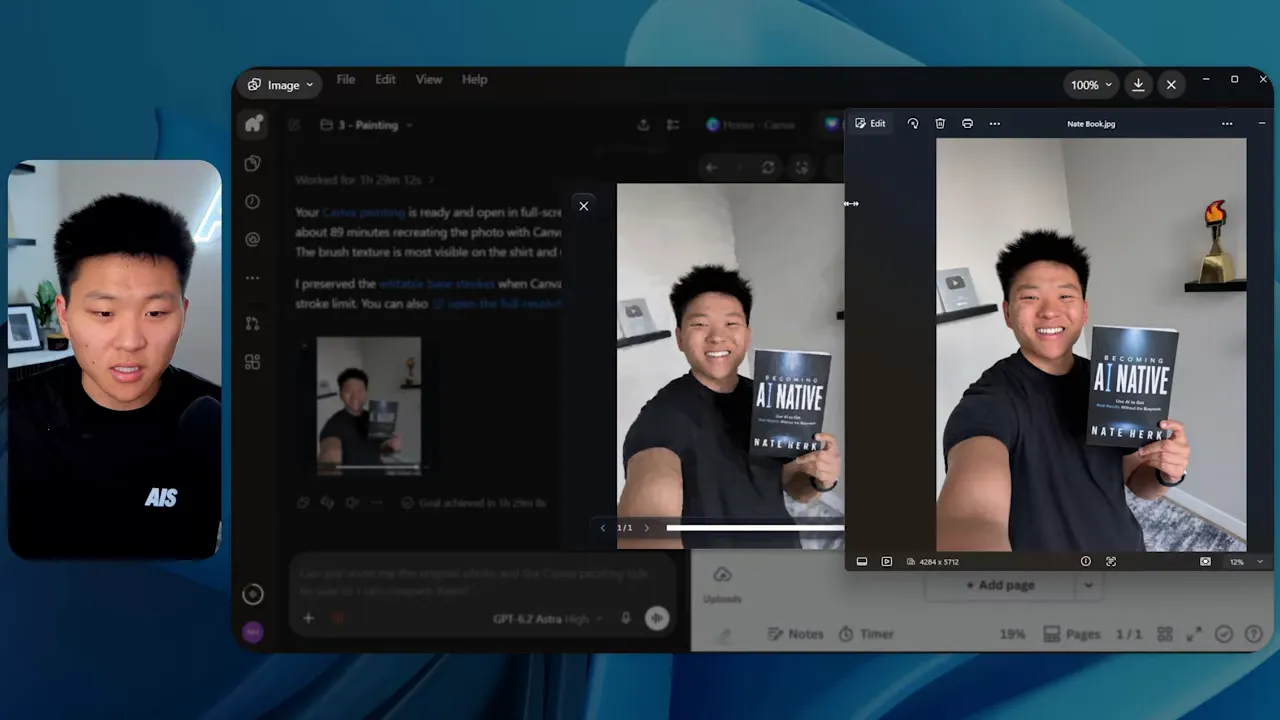
The most interesting part was how Astra handled Canva’s stroke limit. It exported the current painting, imported it back into the design, and continued painting over that image with a fresh allowance of strokes.
That is a useful workaround. Fable kept running into the same limit but did not find a way around it.
I had already noticed Fable sometimes overthinking or overengineering tasks, so I would have expected it to reason its way through this obstacle. In this case, Astra was the one that actually solved the problem.
- Astra: About an hour and a half and $7.50.
- Fable: About three hours and $63.
- My pick: Astra 6.2, easily.
Honestly, both took longer than I would have liked. But Astra produced the better painting for a fraction of the estimated cost.
4. Event Recap Video: Fable Won a Weak Round
I gave both models footage from our July AIS Live event and asked for an energetic, sixty-second recap.
I have had very good results with this kind of task before. The AIS Live site’s hero video, for example, was built with Opus 5.5 from one prompt. So my expectations were not unreasonable.
Neither result came close to what I wanted.
The edits were not energetic, did not feel particularly exciting, and did not use meaningful speech the way I wanted. These were both bad outputs in my opinion. It is possible that my prompting contributed to the problem, but I have seen AI video editing handle this much better.
My pick: Fable 5.2, but only as the better of two disappointing results. Astra cost about $4, while Fable cost about $15. This was not a round where I would call either output a success.
5. A 3D Virtual Summit: Fable Built the Better Event Experience
For the next test, I supplied recordings and assets from another AIS Live event and asked for an immersive, playable 3D world that felt like a real virtual summit.
Fable created a first-person conference environment. I could enter my name, get a badge, walk around, and see the speakers displayed on the walls.
The mouse controls were inverted, which I did not love. Some of the design also felt a little cheap. But the functionality was genuinely good:
- An agenda used the event’s actual session times.
- Session countdowns reflected the schedule.
- Agenda controls could take me directly to a stage.
- Real session recordings played inside the environment.
- Playback controls supported pausing, seeking, and expanding the recording.
- The world included sponsor booths, speaker information, and a VIP lounge.
It felt like Fable understood how someone should move through a conference, not just what a conference room looks like.
Astra’s world looked better at first glance. It had more of an outdoor concert feel, better-looking avatars, and shadows. I could take a seat, play a session, move around the floor, return to my seat, and open the program.
But the overall experience felt less like AIS Live. Even the logo was a little wrong. The visual polish was stronger, but the event journey was weaker.
My pick: Fable 5.2. Runtime was similar for this task, but Fable was more expensive again. I still preferred its more functional, on-brand summit experience.
6. Instagram Reels: Fable’s Editing Was More Engaging
Both Instagram Reel edits turned out really well. This was a much stronger showing than the event recap.
The difference for me was the sound design and B-roll selection. Fable’s choices made the edit more engaging, and the overall result felt better put together.
My pick: Fable 5.2. It cost about four times as much as Astra, but this was a case where I thought the improvement justified the extra cost.
That distinction matters. Lower token usage is great, but it does not automatically make an output the better choice.
7. Long-Form YouTube Editing: Using the Right Skill Made the Difference
For the long-form editing test, I supplied a talking-head recording and asked both models to edit it in our established style. I already had a skill and supporting context built around that workflow.
Astra pulled in B-roll, but it essentially invented a visual style that did not match mine. The result looked cheap to me, and it was not what I had asked for.
When I checked what happened, the correct skill was available. Astra had used an older one called YouTube Raw Full Pipeline instead.
There is some responsibility on my side here. Removing an outdated skill would have reduced the ambiguity. Still, the recent context and previous project folders pointed toward the newer workflow, and Astra did not follow it.
Fable used the correct skill, and the difference was obvious. The introduction created a strong open loop, the animations looked good, and the opening design matched Anthropic’s branding for the subject being discussed. The colors and motion were much closer to exactly what I wanted.
My pick: Fable 5.2. This was a clear quality win, but the runtime was nuts: more than five hours. My usual workflow with Opus 5.5 does not normally take that long.
Astra’s disappointing edit cost about $7. Fable’s much stronger result came with a substantially higher cost and a serious time penalty.
8. Visual Learning Guide: Astra Was Cleaner and Much Cheaper
I asked both models to turn my Grok Bot tutorial into a visual learning guide with screenshots, explanations, and timestamps. Each received the complete tutorial video.
Fable produced a very nice interactive HTML guide. It included a tutorial player, a clickable map of sections, timestamp links, and clips that opened at the relevant moment.
It also cropped screenshots and added numbered annotations to explain specific interface elements. There were tips throughout, plus “got it” controls that tracked progress through twenty-six items. That made it feel like a hands-on learning experience rather than a plain written guide.
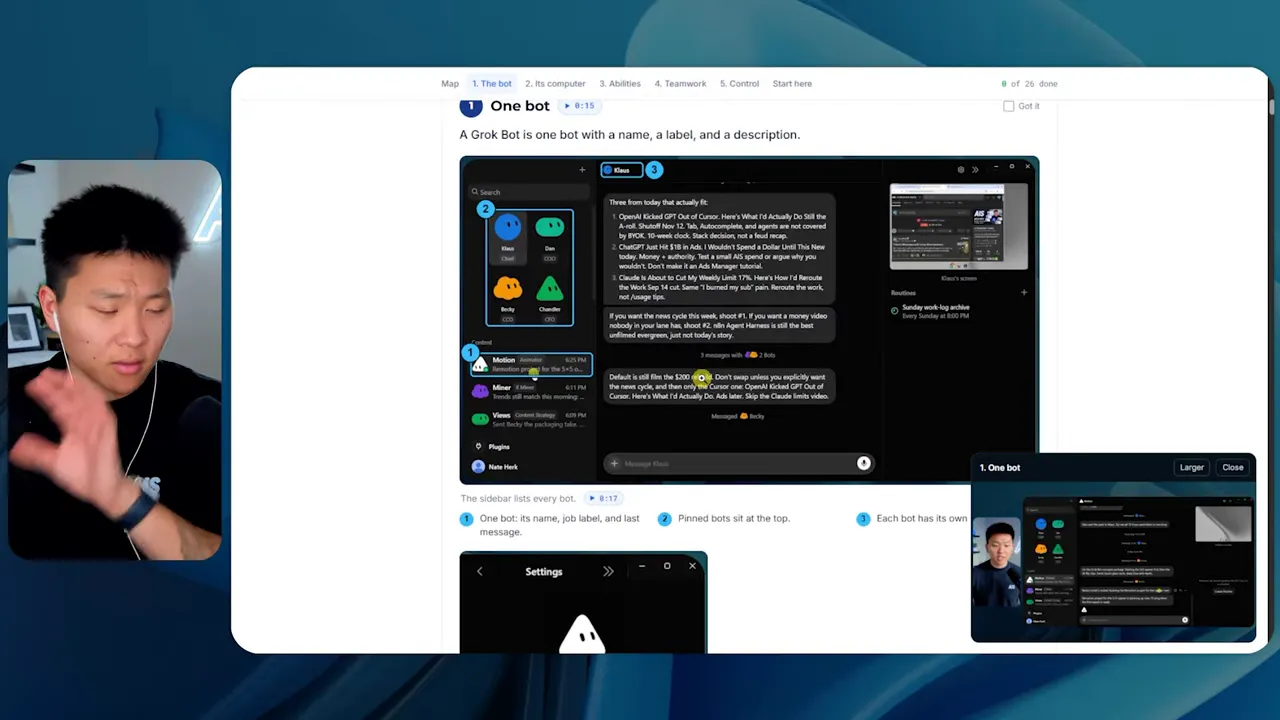
Astra took a cleaner, less overwhelming approach. It organized the material into parts with numbered steps, relevant screenshots, annotations, and timestamped playback.
Its annotations were smaller and less detailed. I also preferred Fable’s corner video player. Astra opened playback in a larger overlay that interrupted reading, and I would have liked the option to keep it tucked into the corner.
Even with that drawback, I preferred the overall simplicity of Astra’s field guide.
My pick: Astra 6.2. Astra cost about $3, compared with about $17 for Fable. Both were useful, but Astra’s cleaner presentation and much lower cost won me over.
9. Trip Planning: Useful Details Beat a Better-Looking Page
This was another deliberately vague prompt: plan a trip.
Astra created a polished itinerary called “The Western Passage,” with a 3D-style map covering San Francisco, Las Vegas, Zion, Bryce Canyon, and Yosemite. It showed how many nights to spend at different stops and looked really nice.
The problem was that I wanted more actionable planning. It did not give me the specific hotel options, flight options, and activities I would need to move toward booking. I would have had to prompt again for those details.
Fable’s design was less attractive and more overwhelming. The map initially looked odd, with only part of the United States highlighted. Interestingly, it independently chose a similar western trip.
But as I moved through the days and destinations, Fable gave me more of an actual plan. It included schedules, links to investigate, driving legs, and map interactions that zoomed into the relevant stops.
This captured a theme I kept noticing: Astra often had a better feel for visual presentation, while Fable often had a better feel for the functional journey.
My pick: Fable 5.2. It cost about $18.60 versus Astra’s $2.70. That is a big difference, but for trip planning, useful details matter more to me than a beautiful overview.
10. Instagram Carousel: Both Missed the Brand
The task was to turn an article into an engaging eight-slide AIS Instagram carousel. The relevant brand guidelines and workflow context already existed.
Neither model followed them properly.
Our established carousels have recognizable branding, a consistent slide treatment, logo placement, and a standard closing message encouraging people to follow for important AI updates. Neither output matched that format.
That was frustrating because the existing automated workflow normally handles a much shorter instruction. I can usually send an article and ask for a carousel without spelling out the entire brand system again.
The lesson here is not that skills are useless. It is that a skill working with one model does not guarantee another model will find and interpret it correctly.
My pick: Astra 6.2, reluctantly. Its design was less overwhelming and looked better than Fable’s, and it was cheaper. But neither output was what I actually wanted.
11. Financial Workbook and Dashboard: Fable Added More Useful Structure
For the finance test, I requested an Excel workbook and an interactive dashboard based on supplied data.
The dashboards were both straightforward revenue displays. Astra’s was a little more visual and aesthetically pleasing, but the workbooks were where the meaningful difference showed up.
Astra included a financial overview, large headline numbers, minimal charts, historical data, and a forecast. I checked for formulas, and the cells I inspected did contain them, which was good. But the workbook felt basic and not especially well structured.
Fable’s workbook was more detailed. It had more useful charts and figures, a more structured drivers section, and highlighting that helped organize the information. The formulas I inspected also referenced other sheets.
I was not just rewarding it for adding more content. The additional structure made the relationship between the numbers and visualizations more useful.
My pick: Fable 5.2. It cost about $15 compared with roughly $2.50 for Astra, and it took around two to almost three times as long. I still preferred its financial forecasting and modeling output.
This is also the kind of task where I would consider turning the stronger result into a reusable skill, then testing whether Astra could reproduce that structure more cheaply with clearer instructions. That is an opportunity to test, not something this comparison proved.
12. Browser Game: Fable Made Something I Actually Wanted to Play
The final prompt was a browser game where I am a pair of underwear trying to escape a bedroom. Very serious benchmarking work.
Astra made a game called “Brief Escape.” I could move around, jump between objects, avoid pins, and reset after failing. But it was slow, largely two-dimensional, and honestly a little boring.
Fable also called its game “Brief Escape,” which was a funny example of the models independently landing on the same obvious idea.
Its game was much closer to what I had imagined: a proper 3D bedroom, better physics, a cat, checkpoints, and movement that included a flying or gliding mechanic.
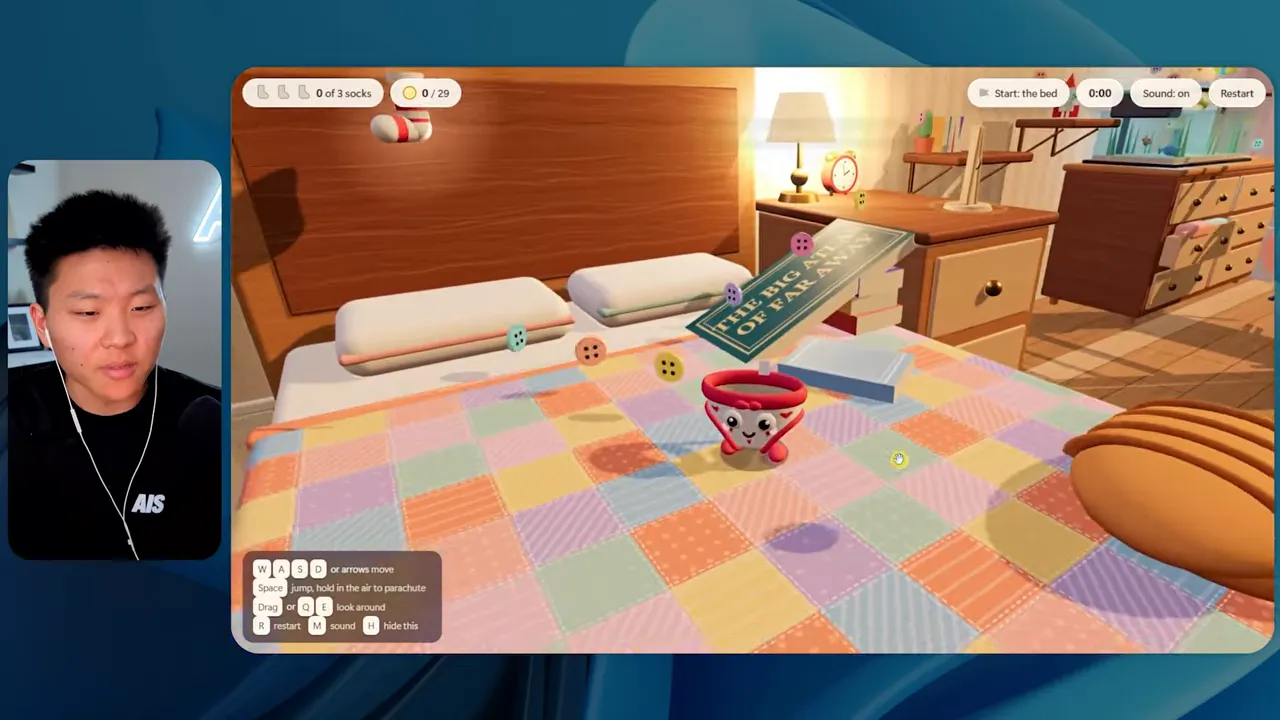
Fable’s version felt like something a kid could actually play and enjoy, rather than just a demonstration that the basic mechanics existed.
My pick: Fable 5.2. It cost about $19 versus Astra’s $3, but the gaming experience was clearly better.
The Final Score: Fable 7, Astra 5
Here is how my choices landed:
- Astra 6.2 won: Web design, slide decks, Canva painting, visual learning guide, and Instagram carousel.
- Fable 5.2 won: Event recap, 3D virtual summit, Instagram Reel, long-form YouTube edit, trip planning, financial model, and browser game.
Those are my subjective picks, and they do not all mean the same thing. The event recap and carousel rounds were especially weak: winning those did not mean producing a result I was happy with.
Why the Cost Gap Was So Big
In this comparison, both models had listed pricing of $8 per million input tokens and $40 per million output tokens. Yet Fable’s total estimated API cost was 7.2 times higher, and its total runtime was almost five times longer.
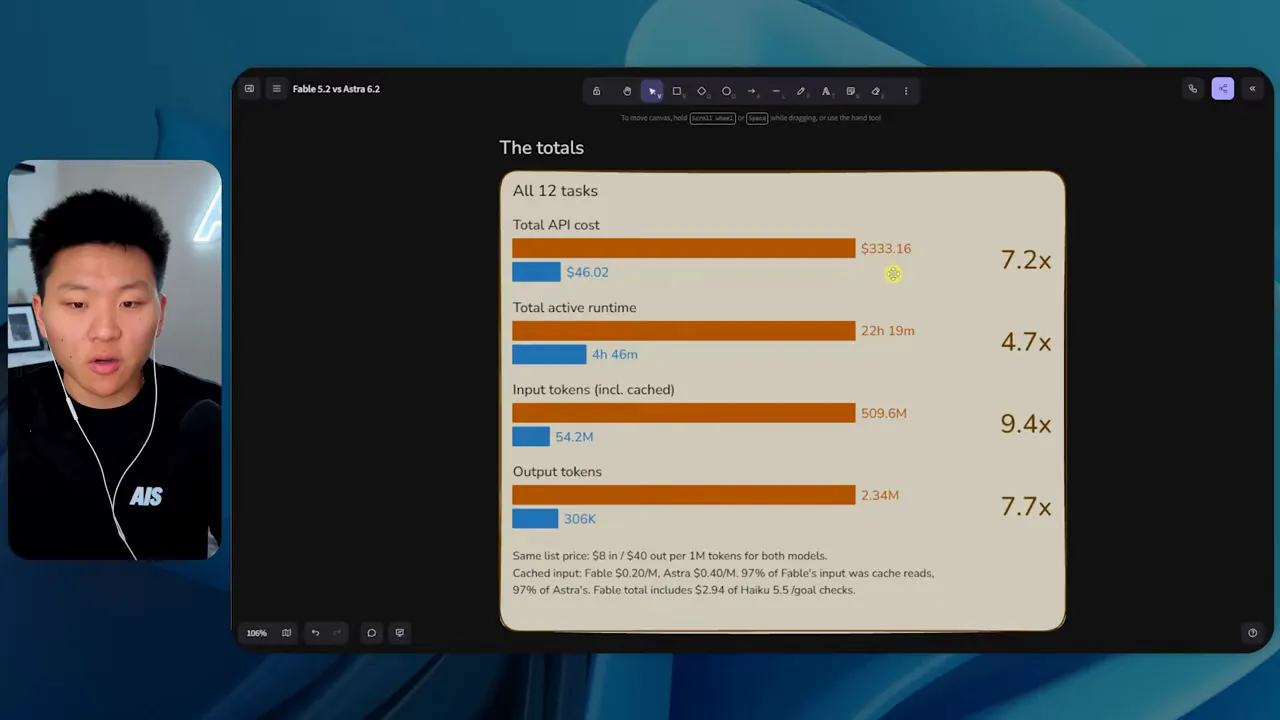
The difference came from usage. Fable consumed substantially more input and output tokens. Astra in Codex was much more token-efficient than Fable in Claude Code across these tasks.
That does not make Astra automatically better. Fable’s extra work sometimes produced a result I strongly preferred. But when the outputs were close, the efficiency difference was hard to ignore.
Which Model Would I Use?
If I wanted a clean visual result quickly and cheaply, Astra would be a very compelling starting point. It held its own across the twelve tasks and was especially strong in the Canva computer-use test.
If I cared more about the completeness of an interactive experience, richer planning, video editing quality, or a more structured financial model, Fable earned several of its wins. I would just go in knowing that it might spend a lot more time and tokens getting there.
The biggest practical issue for both was skill reliability. Astra chose an outdated editing skill, and both models missed the carousel workflow. Before trusting either one with a repeatable production process, I would verify that it is actually using the right instructions and assets.
My next step would be to take the workflows where Fable produced something stronger, make the requirements more explicit, and see how close Astra could get with a well-defined skill. The potential savings are too large not to test that.
Finally, these were not hardcore software engineering benchmarks. I did not test large-codebase refactoring or deep backend work because those are not the tasks I spend most of my time doing. These results are useful for the creative, business, and automation work I actually hand to AI.
Fable won more rounds. Astra was dramatically more efficient. The better choice depends on whether the extra quality in your particular workflow is worth the extra cost.


