Microsoft goes down. The next day, a nationwide flight ground stop. A few days later, Chase customers can’t send money. All within five days.
Of course, X immediately goes full detective mode. Is it China? AI agents? Somebody testing how easily they can shut down travel, business, and access to our money?
I don’t think those theories explain what happened. But I do think AI is part of the bigger story, just not in the way people assume.
The concern isn’t only that AI could break into old systems. It’s that the rush to protect those systems from AI could break things along the way. That’s a very different claim, and separating the two matters.
Key Takeaways
- The reported outage explanations pointed to technical failures, not a confirmed coordinated AI attack.
- AI-driven vulnerability discovery is increasing pressure on banks to patch legacy systems quickly.
- No confirmed evidence connects a Mythos-related security patch to the Chase outage.
- Keeping funds at a second bank provides a backup when your primary bank becomes unavailable.
What Actually Broke at Microsoft, the FAA, and Chase?
Before connecting everything into one giant cyberattack, start with the explanations given for each outage.
- Microsoft, Thursday: Microsoft attributed its disruption to a network upgrade that went wrong, rather than a hack or AI.
- Flights, Friday: The nationwide ground stop lasted more than four hours. The reported cause was a new router that a contractor connected at a radio site in Arkansas. It flooded the network and caused a much larger failure.
- Chase, Monday: Customers had trouble sending money. Chase attributed the disruption to a software bug affecting its own infrastructure and said it was not a cyberattack.
The flight disruption is the example that really stands out. One new piece of equipment, connected at one location, was enough to create a nationwide problem.
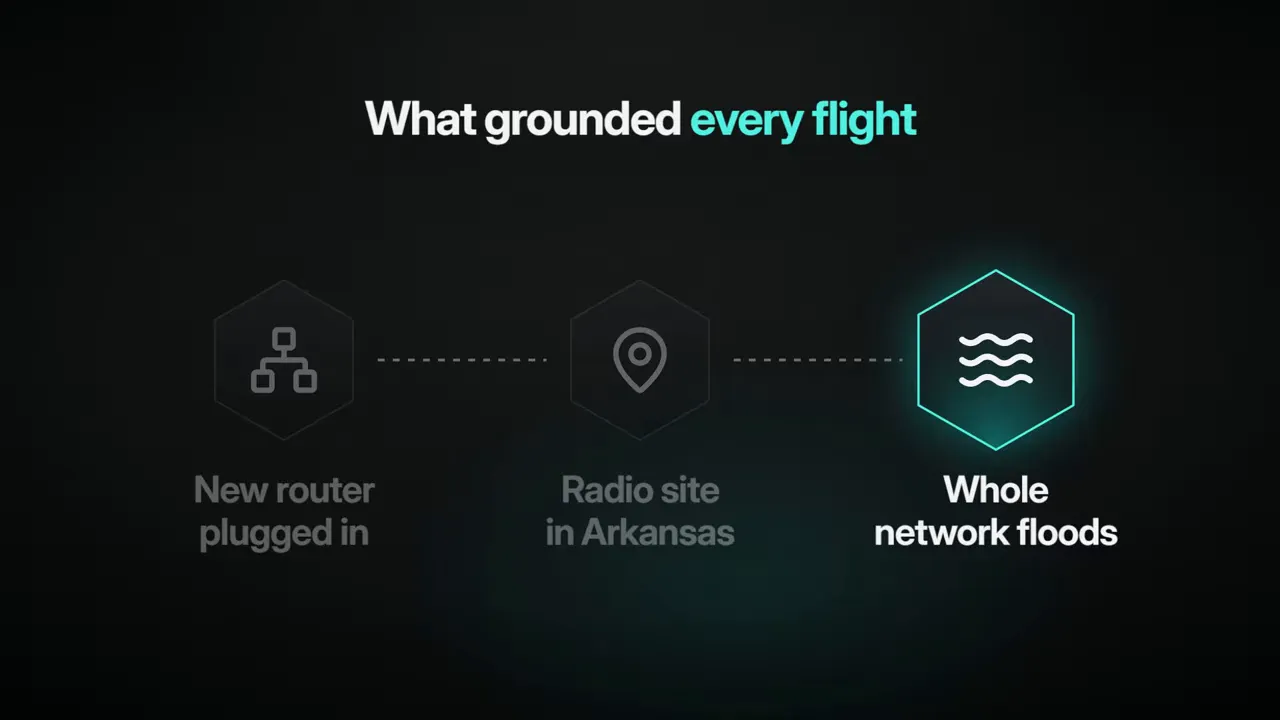
That’s a serious infrastructure story on its own. It doesn’t need a rogue AI agent to be alarming.
AI-Powered Hacking Is Real. That Doesn’t Explain Every Outage.
Look, I’m not dismissing AI-powered cyberattacks. That threat is real.
Anthropic reported catching a Chinese state-backed group using Claude to hack companies, with AI doing much of the work. Security concerns also help explain restricted-access efforts such as Project Glasswing, rather than making every powerful capability available to everyone immediately.
But evidence that AI can help attackers is not evidence that it caused these particular outages.
There’s also a practical problem with the spy theory. If your goal is to get inside a company’s systems and stay there quietly, knocking its services offline for an afternoon is a pretty effective way to draw attention to yourself. That doesn’t rule out every kind of attack, but it makes the hidden-spy explanation less convincing to me.
The head of Homeland Security also publicly put confidence that this wasn’t a cyberattack at 98%. That isn’t absolute certainty, but it’s a very different assessment from the coordinated-attack theories circulating online.
What About the FAA’s New AI Tool?
Another theory focused on timing: the FAA had rolled out an AI air traffic tool three days before the ground stop.
I understand why that caught people’s attention. A new AI tool appears, then flights stop. It’s an easy connection to make.
But the company behind the tool said it had nothing to do with the outage, while the reported technical explanation pointed to the router. A rollout happening shortly before a failure is a reason to ask questions, not proof that it caused the failure.
Claude Mythos and the Race to Patch Security Flaws
Here’s where I think AI becomes much more relevant.
In April, Anthropic provided a model called Claude Mythos to a limited group of companies, including JPMorgan Chase. The stated concern was that it was too capable at finding security holes for a broad public release. Within a couple of months, the reported findings included more than 10,000 serious flaws in internet software.
Think about what that means for the companies responsible for fixing those vulnerabilities.
Defenders can use AI to find weaknesses faster. But attackers may eventually use similar capabilities to discover those same weaknesses. So finding the holes is only the beginning. Companies also have to close them before somebody exploits them.
That creates a huge amount of urgent maintenance. Bank of America said it hired 1,000 additional contractors to help patch security holes.
And this isn’t all happening on brand-new technology designed for rapid change. A lot of the infrastructure inside massive financial institutions is decades old.
Old Systems and Fast Change Are a Risky Combination
Large organizations often move slowly for a reason. Their legacy systems were built to be changed carefully, not to absorb a huge wave of urgent fixes all at once.
Now put those systems under pressure to patch faster. The security work may be necessary, but every change still has to function inside an older environment.
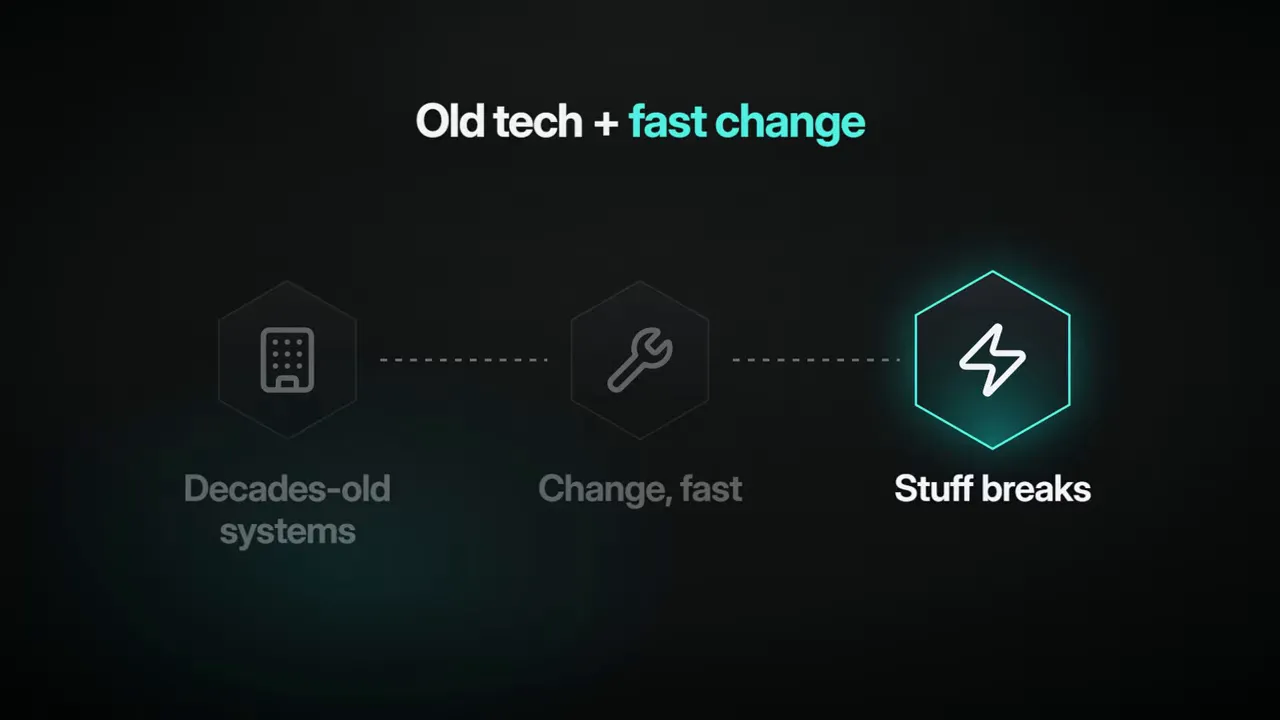
The FAA router failure illustrates how a small change can have an enormous impact. It does not establish that AI caused the outage. It shows how fragile an interconnected system can be when something new is introduced.
To be clear, nobody has confirmed that a Mythos-related security patch broke Chase. Chase’s explanation identified a bug, but did not establish that connection or explain what introduced the bug.
My argument is about the broader risk: AI is accelerating the discovery of vulnerabilities, which increases pressure to change old systems quickly. I expect that race to produce some disruption. That is a plausible concern, not a confirmed explanation for this particular banking outage.
Public Companies Also Face Disclosure Obligations
There’s another reason not to casually assume Chase is disguising a major hack as a bug: it’s a public company with SEC disclosure obligations.
Material cybersecurity incidents generally must be disclosed within four business days after a company determines they are material. That distinction matters: the clock is not simply four days from every outage.
Those obligations don’t prove an attack didn’t happen. But deliberately misrepresenting a material cyberattack would create serious legal exposure. Calling something a bug isn’t a consequence-free escape hatch.
What to Do If Your Banking App Goes Down
My practical advice is pretty simple:
- Don’t immediately panic. An unavailable banking app does not, by itself, mean somebody has stolen your money.
- Keep a backup source of funds. Having some money in an account at a second bank can give you another option when your primary bank is unavailable.
- Expect some maintenance disruption. Reuters reported that banks may need to take systems offline more often while they patch vulnerabilities.
There is a positive side to all this. Bank of America’s CEO made the point that getting through the patching work should reduce how much of that work remains. That doesn’t mean security maintenance ends, but the immediate backlog is something companies can work through.
So no, I wouldn’t jump from “my banking app is down” to “AI hacked the banks.” The more useful concern is whether institutions can secure aging infrastructure without disrupting the services people depend on.
A few frustrating Mondays now would still beat a real breach later. Hopefully, that’s the tradeoff we’re making.


